2007 Posts
Pleo Dinosaur — Herd Behavior
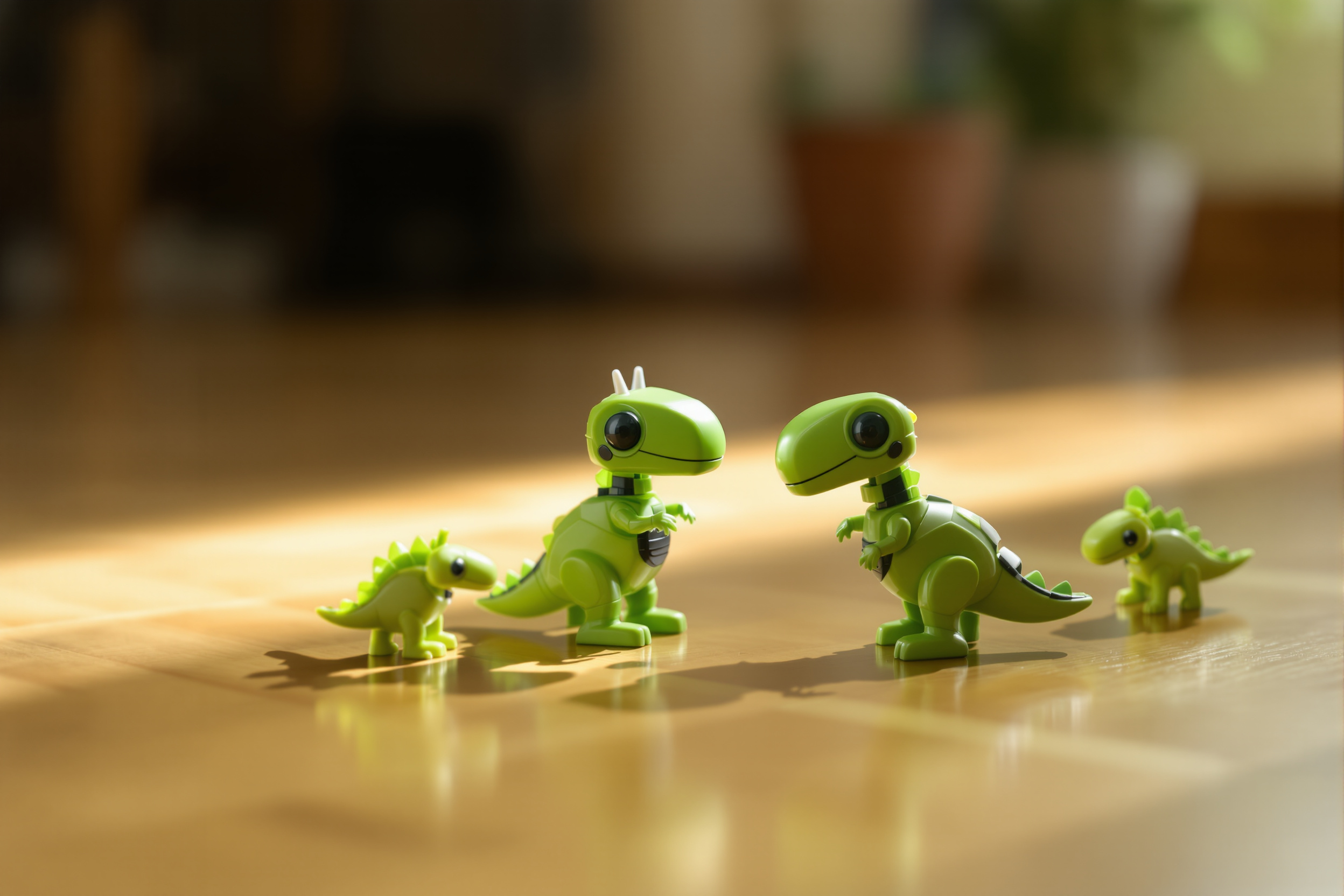
From 2007: this news post from the Pleo Dinosaur! enthusiast blog was written as Pleo approached his 2007 launch.
Originally posted June 9, 2007.
Pleo won't just be a very smart baby dinosaur — he'll be a very social one. One of his most delightful features is what the company calls herd behavior: the ability for multiple Pleos to notice one another and interact when they're in the same room, turning a pair or a group into something like a little family.
How the Herd Works
Pleos communicate using infrared signals. When a group of them comes into contact, some genuinely fun group dynamics kick in:
- The Pleos "converse" with each other over infrared.
- The group appoints one dinosaur to be the alpha leader.
- The alpha can then share tricks and behaviors it has learned — including things it picked up living with and interacting with you.
- The other Pleos can effectively "catch" those behaviors from one another, spreading learned tricks through the herd.
Why It's Special
This is the kind of feature that turns a single robot into a little society. Two Pleos raised in different homes bring different learned behaviors to the meeting, so putting them together isn't just twice the cuteness — it's an actual exchange, with each dinosaur a little different for having met the other. It reinforces the core Pleo idea: these aren't gadgets running identical routines, they're individuals with histories. It also gave two-Pleo households a reason to keep both dinosaurs awake at once, just to watch the negotiation of who would lead — a small, emergent drama no one had scripted in advance.
More on Pleo's Abilities
Herd behavior is one thread in Pleo's rich sensor-and-software design. See the whole picture on the specifications page, meet the dinosaur on What Is Pleo?, or read the Pleo reference for a summary.