What Is Pleo? The Robot Dinosaur That Felt Alive
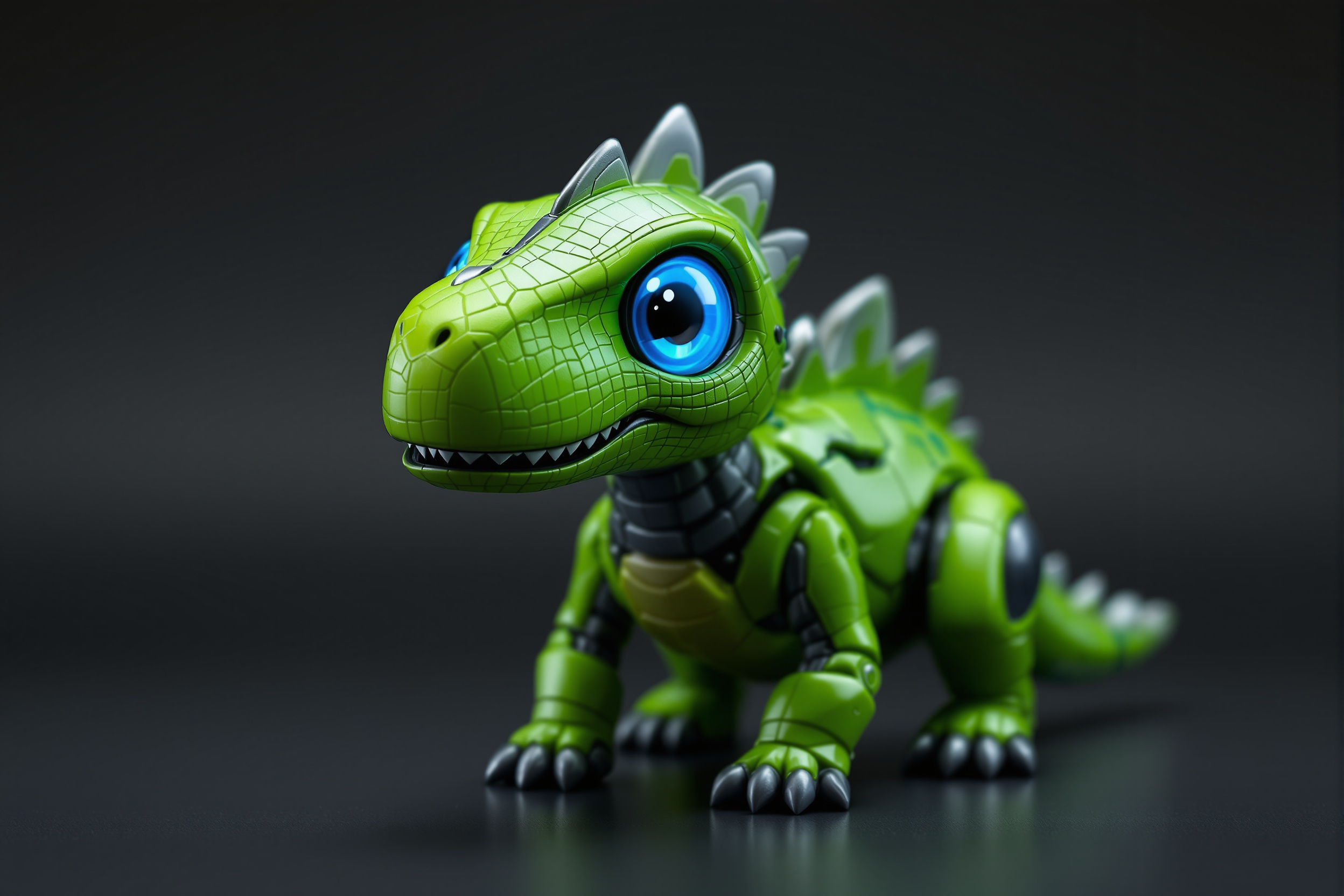
Pleo was an animatronic robotic pet designed to behave like a living baby dinosaur — specifically, a one-week-old Camarasaurus. His makers deliberately avoided the word "toy." They called him an artificial life form, and the whole design was bent toward one goal: making you believe, if only a little, that something was alive inside that soft green skin.
Not a Gadget — a Creature
Most robots of Pleo's era ran fixed routines: press a button, get a trick. Pleo worked differently. He had no "on script." Instead, a suite of sensors fed a behavior engine that produced moods and reactions in the moment. He would yawn, sneeze, nuzzle, sulk, get curious about a sound, or tire himself out and curl up to sleep. No two sessions felt quite the same, and owners quickly started talking about their Pleo the way they'd talk about a pet — because that is exactly how he was meant to be experienced. As the technology press of the day observed, this placed Pleo among the first genuinely affective consumer robots: machines built to be felt for, not merely operated.
The Idea Behind "Artificial Life"
The phrase Pleo's makers loved — artificial life — was more than marketing. Their thesis was that lifelike behavior emerges from the interplay of simple internal drives with a rich stream of sensory input, rather than from a big library of pre-recorded stunts. Give a robot hunger, curiosity, comfort, and fatigue, let those drives compete, and let the winner shape what the robot does next, and you get behavior that looks improvised because, in a real sense, it is. Pleo was the flagship demonstration of that philosophy.
Growing Up: Pleo's Life Stages
Pleo didn't arrive fully formed. Straight out of the box he behaved like a newborn — unsteady, blinking, finding his legs. His makers described a developmental arc across roughly three stages:
- Curious hatchling — wobbly first steps, lots of exploring, discovering the world (and you).
- Adaptive infant — steadier movement, growing responsiveness, the beginnings of preferences.
- Juvenile dinosaur — confident behavior and a temperament shaped by months of interaction.
That sense of a creature becoming something over time — rather than being identical on day one and day one hundred — was central to Pleo's charm, and it's a big part of why owners grew so attached.
A Personality You Helped Shape
Pleo's temperament genuinely responded to how he was raised. Owners who petted and engaged their Pleo often got a more sociable dinosaur, one inclined to stay close and wait for attention. A Pleo left more to his own devices tended to become more independent and exploratory. It wasn't deep machine learning by modern standards — the launch software allowed only "subtle shaping," with richer development promised through later updates — but the effect was real enough that two Pleos raised in different homes could feel like different individuals with their own quirks.
The Senses Behind the Magic
The illusion rested on hardware. Pleo carried capacitive touch sensors so he knew when and where he was being petted, a camera in his nose to sense his surroundings, tilt and orientation sensing so he knew which way was up, microphones for sound and rhythm, foot sensors for the ground beneath him, and infrared so he could detect other Pleos nearby. Together these gave him an unusually broad awareness of his world for a consumer product of 2007. We break the full sensor list down on the specifications page, and answer the common "can he see or hear me?" questions in the FAQ.
Why the Concept Endured
Pleo mattered because he reframed the ambition of a mass-market robot. The point was not to be clever on command; it was to be company. That idea — a machine you form a bond with — runs straight through to the social and companion robots that followed years later. To trace how Pleo came to be and what became of him, continue to the Pleo timeline, or read about the companies that built him.