Pleo FAQ: The Questions Everyone Asks
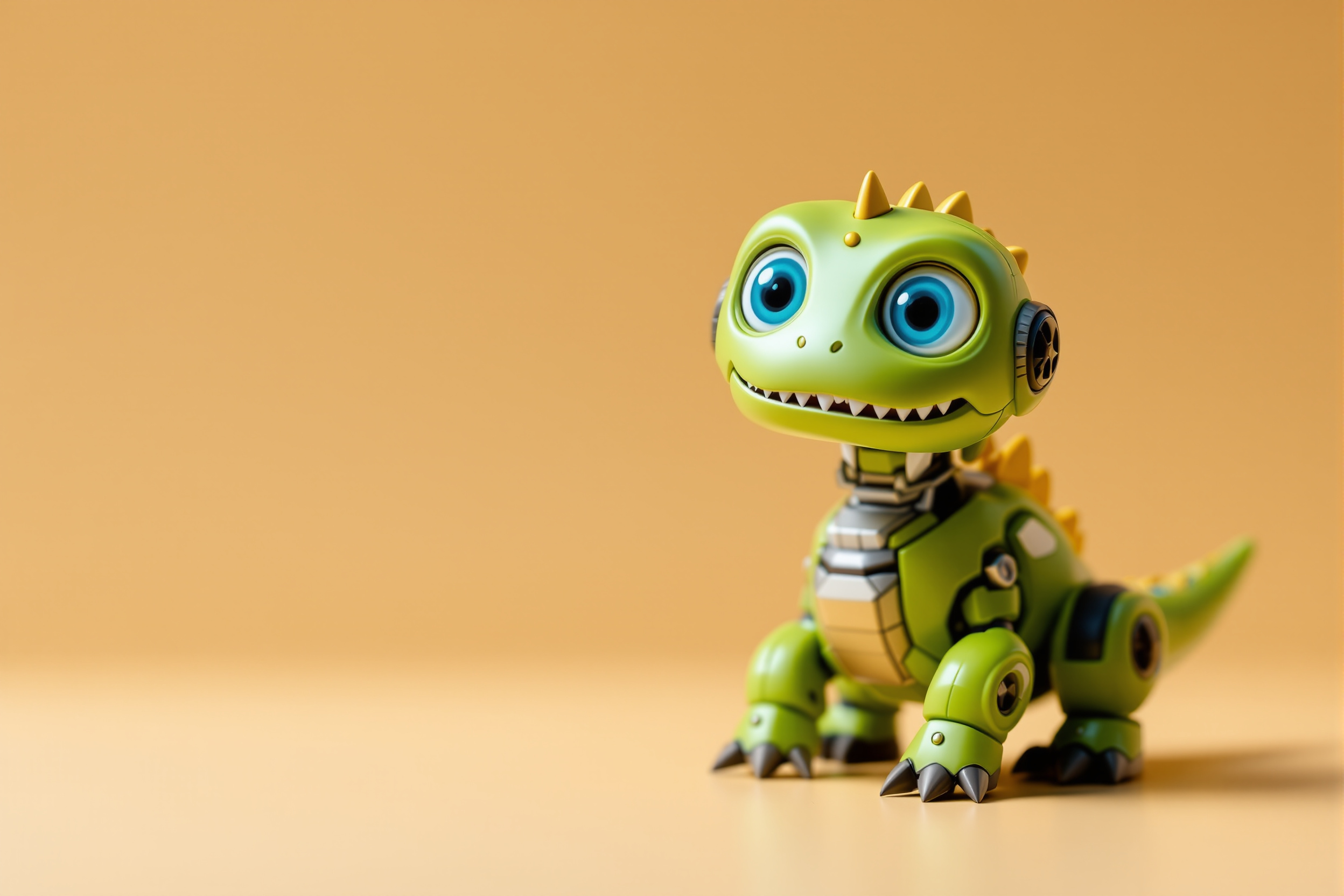
Curious about the little robot dinosaur? Here are straight answers to the questions Pleo owners and newcomers have asked since 2007. For the technical detail behind them, see the specifications page.
What does Pleo eat?
Only batteries and attention — but he loves to nibble his training leaf, a plastic accessory that works as positive reinforcement. Offer the leaf when Pleo does something good and he'll chew happily for a while, the same way you might treat a cat or dog, before wandering off to other baby-dinosaur business.
Can Pleo recognize my voice?
No. The original Pleo had neither voice recognition (knowing who is speaking) nor speech recognition (understanding what words are said). He responded to sound, touch, and motion, and reacted to the tone and rhythm of his environment — but he never understood commands. Because Pleo was upgradeable, fans always hoped later software might add such features one day.
Does Pleo actually learn and have a personality?
In a modest but real sense, yes. Pleo's Life OS shaped his temperament based on how he was treated — more sociable with frequent petting, more independent if left alone. The launch software allowed only "subtle shaping," with richer development promised in updates, but two Pleos raised differently could genuinely feel like different individuals. More on this on the What Is Pleo? page.
Does Pleo have a camera? Can he see me?
Pleo has a camera in his nose, but it senses light, edges, and surroundings for navigation — it does not recognize faces, despite a persistent rumor to the contrary. The clarification appears in the nose camera note.
How long does the battery last?
A Pleo battery pack was rated for roughly a two-to-three-year service life, giving about two to four hours of active play per charge before he naps to recharge. Crucially the pack is replaceable, so a fresh battery can bring an old Pleo back to life. See the care guide.
Can two Pleos play together?
Yes — this was one of Pleo's most charming features. Using infrared, a group of Pleos can detect each other, elect an "alpha," and share behaviors they've learned. We keep the original herd-behavior note describes the event.
Can I program or customize Pleo?
The technically inclined could, using the Pawn scripting language Ugobe exposed through Life OS. Hobbyists wrote and shared custom behaviors, sounds, and tricks, and a lively modding scene grew up around the practice. Details are on the specifications page.
Does Pleo sleep and dream?
Pleo genuinely sleeps — he tires with activity and settles down to nap and recharge, and disturbing a sleeping Pleo gets a suitably grumpy reaction. His makers also spoke playfully of him "dreaming" in his own baby-dinosaur way, a nod to the twitches and sounds he makes at rest. It's behavior, not literal dreaming, but it's a lovely example of how Pleo was designed to be read as a living creature down to the smallest idle moment.
How big is Pleo?
Pleo is roughly the size and weight of a small newborn animal — substantial enough in the hands to feel like a real pet, but light and compact enough for a child to carry. His long neck and tail make him look larger than his footprint suggests.
Is Pleo still made? Can I still buy one?
No. The original maker, Ugobe, closed in 2009; the successor, Innvo Labs, revived Pleo as "Pleo rb" and later wound down as well. Pleo is no longer manufactured, so any Pleo today comes from the secondhand and collector market. Our collecting guide explains what to look for, and the Pleo reference summarizes the models.
Is this the official Pleo website?
No. This is an independent, unofficial fan reference maintained by enthusiasts. We are not affiliated with Ugobe or Innvo Labs, and we sell nothing. Our aim is simply to preserve Pleo's story, specifications, and community memory.